

Integration Beats Power
New computers can be designed in such a way that the components (cpu, memory, neural engine, etc) are integrated onto a single chip as opposed to having the components be spread across and connected through a motherboard. The tighter integration result in superior efficiency and performance, so that a device that with much weaker support (eg RAM) can run circles around a similar motherboard-based computer with more.
When we work on coordination and connection and teach our body to work as a unified whole, aren’t we working on an analogous process? Sure, we want to work on improving the component attributes themselves, the elasticity and strength and reaction and timing and and and. But by working on coordination and connectivity, we also get to work on pulling these together in a superior way, resulting in greater force transmission, efficiency, and still with the quickest time possible.
(With the system-on-a-chip design, it comes at a cost - a loss of flexibility/modularity. You cannot swap out components as easily. But we CAN adapt the components, and then re-solder the separate things into the unified whole, recalibrating the thing.)
If we didn't need integration, doing footwork and spine work would be enough to succeed in tasks using both, but when we confront a task requiring a synthesis of qualities, we realize it’s not. That task, which can be extraordinarily simple in nature, by operating at a higher level than the isolated qualities will produce many many connections between those various layers. Redundancy is thus built in.
And we don’t need perfect connectivity, to do reps of everything to everything else - once we do enough, like a team of teams, there is enough connection.
So, often it will seem like we are disconnecting things, like footwork from the spine, to accomplish a task, because there isn’t a 1 to 1 relationship between what the feet and spine are doing. But actually, they are integrated into countless new patterns (transistors, to stay close in the analogy). This is the singular power of these synthesis-provoking tasks.
(As above, so below)
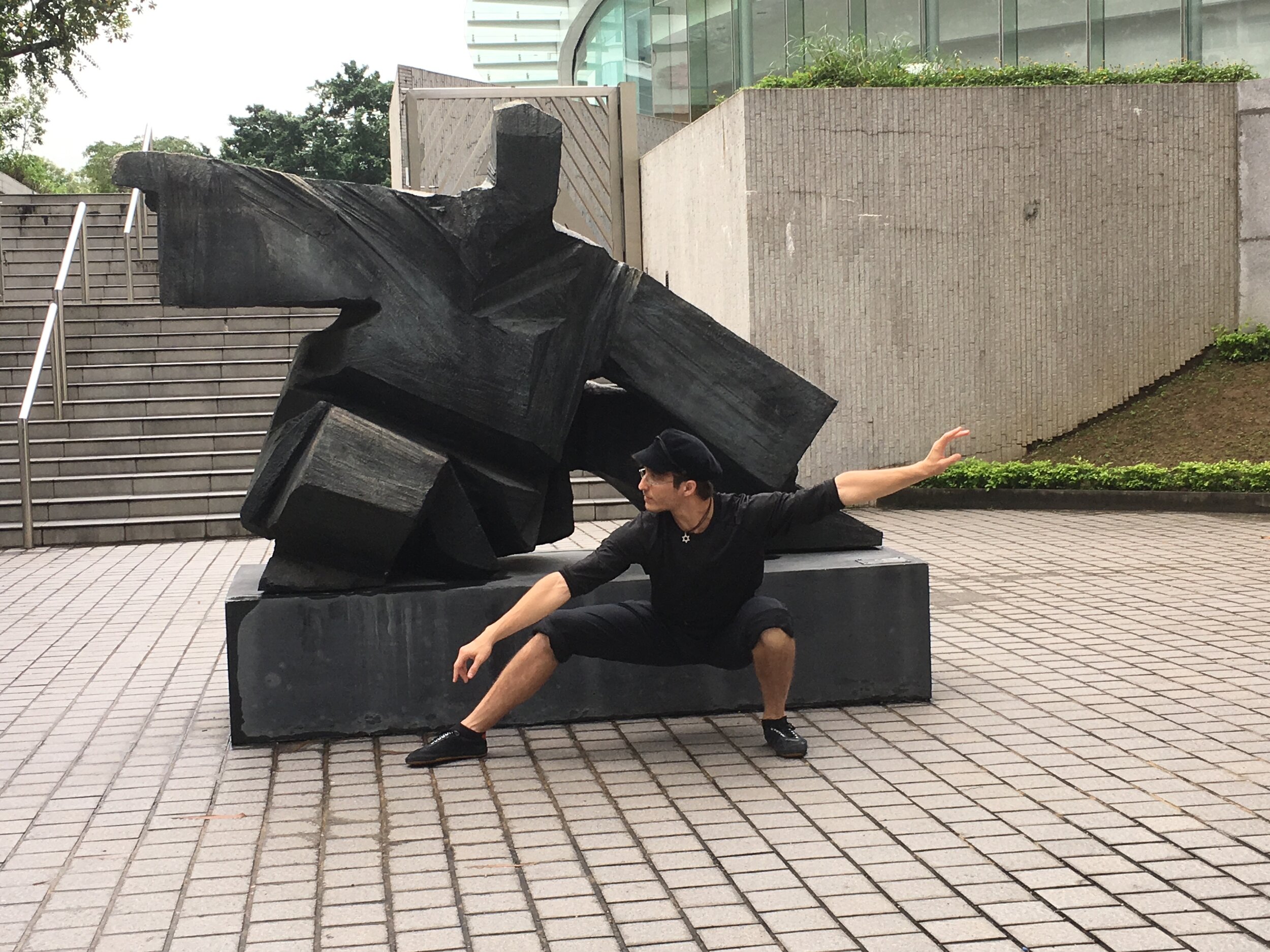
Movement as language
Movement is not a language...
Movement IS language.
As Merleau Ponty says of language - “there is only one language in a state of becoming... that is becoming different from itself while remaining the same”.
There isn’t some collection of “movements”, but just movement as dynamic phenomenon, a non-static entity that unfolds into the many manifestations that we call movements, and is never really distinct from those many manifestations, but neither is it apart from them...
To see movement at the same hierarchical level AS language, is to realize the enormity of what it is, can be, and can bring into our lives as container...
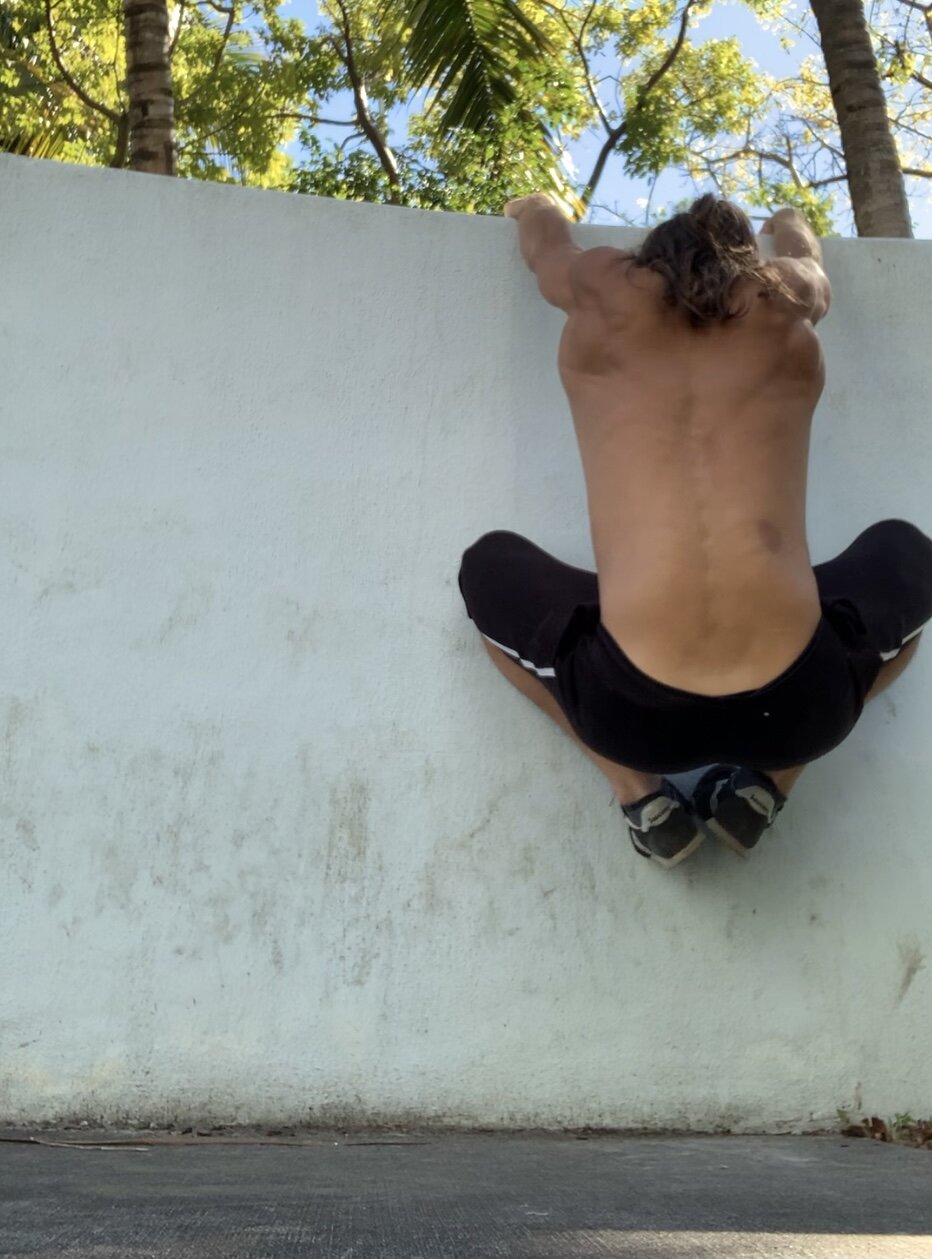
Don’t Kill the Golden Goose: the Uncontrollable is Sacred.
I could build the perfect wall in my studio, then maybe a rail, and all the other things besides. I’d never have to venture outside; I would have the perfect self-contained environment of practice.
Except...
Except, I would lose the part of my practice that demands adapting to a changing scenario by finding hidden solutions.
Except, I would lose the part of my practice that pushes me out of my comfort zone.
Except, I would lose the part of my practice that involves discovering unknowns within the task, as the environment itself changes in unpredictable ways.
Except, wouldn’t the entire endeavor denature the essence of an “Environmental Movement Practice”?
Environment represents what we don’t have control over. This uncontrollability is tied fundamentally together with the qualities that we turn to environment for - it is a golden goose, and if we exert too much influence, we suffocate it.
This is endemic to movement practice, a key genetic material - we must embrace it, planting seeds that nourish chaos and uncertainty within the edifices, concrete and conceptual, that we build.
Statistics and Movement Practice
If I simply drop sugar into my coffee, the coffee doesn't sweeten. If I simply stir my coffee, again, the coffee doesn’t sweeten. But if I do both, something happens - my coffee gets sweeter.
We can say in statistical terms that there is an interaction between the two variables: how much I stirred, and how much sugar I put in my coffee, on an outcome - the sweetness of my coffee (for the record, I hate sweet coffee). Effects of single variables interact with each other to yield secondary effects.
This is known as an interaction effect in statistics - when the outcome isn’t dictated only by the sum of the parts of contributing factors, but also by an interaction effect. (The "interaction term" is the quantification of this effect).
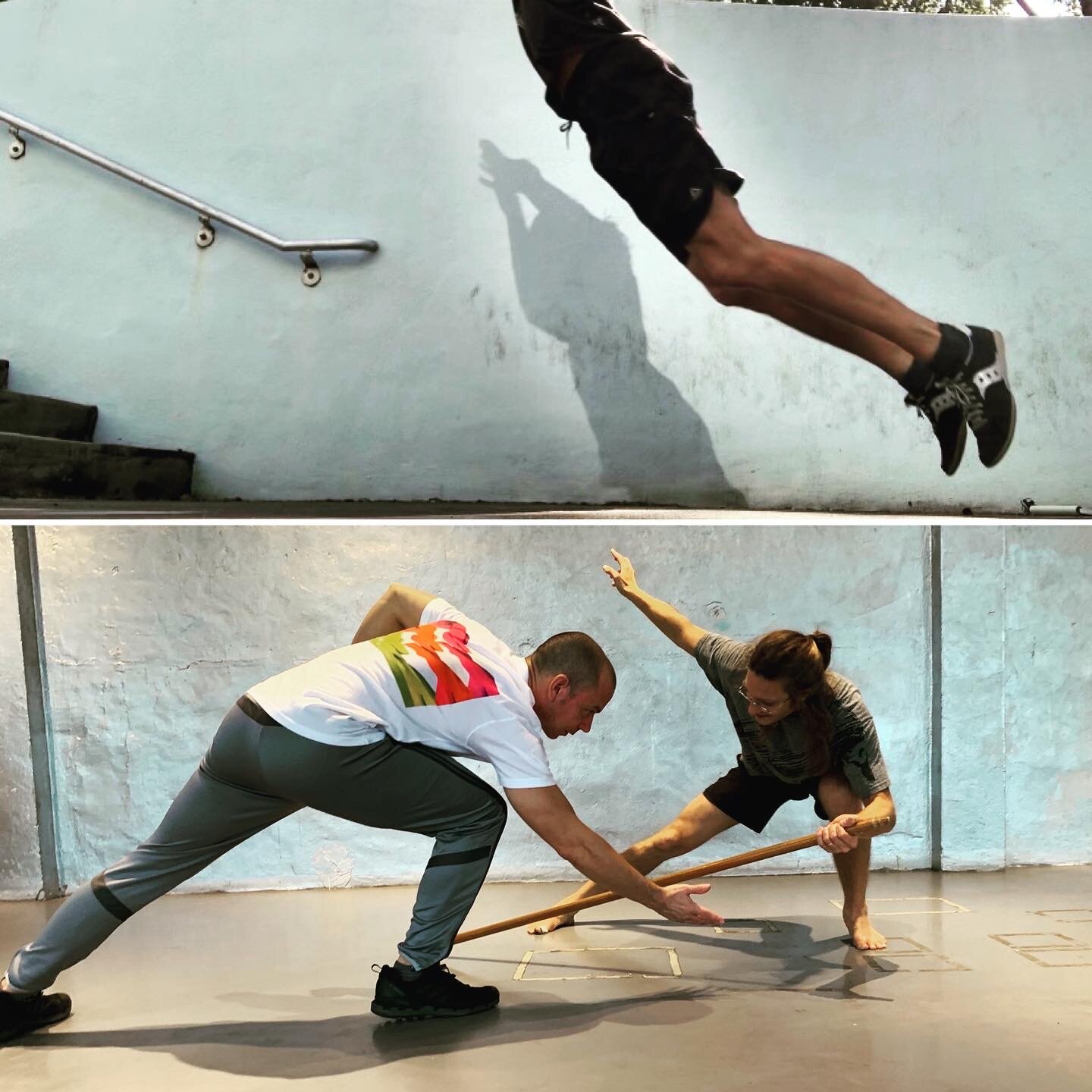
Ido recently shared the “Stick Game”, an exemplar of a low-tech, high-result, endless development type of game. But it is also a succinct and clean demonstration of the interaction effect in action: you would think that simply improving reaction time, or footwork, etc, would directly improve performance in a tactical game. But it isn’t enough. There is a need to go beyond working on attributes, and to pull them together in an organized fashion.
And that is what such a game does. Ido has presented countless games, tasks, scenarios, time and again, which serve as platforms for addressing attributes at a higher level. To develop, not just a raw attribute, but at a higher level of complexity, the organization of those attributes (which becomes closer to the amalgam that is you yourself).
The platform, in a sense, also serves to recalibrate your new upgraded hardware and software, by giving it wet-tests, immediate feedback, and over time these new attributes become more finely tuned into the totality of the system, rather than being some external unappropriated capacity.
This is a higher order way of thinking, and makes sense of things where more simple approaches fail to render understanding of a situation. The interaction effect and two of it’s children, the mediator and moderator effects, are very useful heuristics for analyzing the world around us.

Creativity & Learning
Since when is creativity about doing something different than somebody else? Since when does a thing have to look different to be different?
The learning process is ALWAYS new - you are figuring something out nobody has done before: how to solve a problem with your particular mindbody configuration/constellation. It doesn't matter that the person next to you seems to be doing exactly the same thing; this is the world of the black box, and inside, the experience is completely different, and the tools you use and how you use them to figure things out are worlds apart from your neighbor doing the same task.
Also... creativity for it's own sake also is problematic - a concept I have learned from Ido and that has changed so much of how I work. We should be aiming to solve problems, and use creativity as one means to solve those problems.
You don't need to add a flourish to be different. You are what you are, with all your similarities and differences. I came into this more general practice from a practice focused more on layers of expression and catharsis. I immediately had an urge to differentiate myself, to look different or unique when doing the work. That has fallen by the wayside a long time ago. I don't care to look different from my neighbor... My head is bent down, and I'm solving the riddle that emerges when I meet the task before me.
And I leave all this with a question - does something need to feel creative to BE creative?