

Are Injuries Good?
Are injuries “good”?
Maybe we instead can ask, “how can I make this injury good for me?”
1. A smaller injury can create the awareness and changes needed to avoid a larger injury that was lurking. Awareness to how you move and changing your biomechanics.
2. We can use the rehabilitation process to become even stronger than we were before the injury. Fixing weak links that caused the injury means improving overall performance.
3. We’re so afraid of the unknown, so attached to the familiar face of our practice that when it changes, however superficially (like when we cant do our favorite exercises), we feel a loss of identity. But in reality, a toy was taken away. This taking a toy away is the universe’s infinite kindness, reminding us patiently and with grace, that it will all be taken away, to stop identifying, to look deeper and find something deeper behind the attachments.
An injury isn’t a “pause” to practice - it’s a transitional state. It’s not just the body breaking down, but also habits, patterns, movement itself, different layers of the organism as a whole. The system as a whole loses homeostasis and begins searching for a new state. It’s a time of vulnerability, of instability, but also of great potential for growth as well.

Pain Free Movement
Breaking pain cycles and achieving pain free movement. If a movement is safe, but the nervous system doesn’t think so… it isn’t. So give the nervous system opportunities to re-educate itself.

Movement, Body, and Life are all continuous surfaces
In “A Continuous Shape”, the stone carver Anna Rubincam explains that there are no beginnings nor endings to the parts of the body - it’s all a continuous single surface, manifesting as undulations of slack and tension.
We want to bring the same understanding to movement - to the body itself, but also to how we move, and more broadly, to the recognition that there is no barrier between practice and life, that our being is also one continuous surface of existence.
A practical example: the upper fibers of the transversus abdominus, an expiratory muscle, interdigitate with the diaphragm, an inspiratory muscle. The consequence is that any forceful attempt to regulate breathing limits it - you cannot fully exhale, if you’re also simultaneously contracting the inspiratory muscle.
This digs into the nature of “being” as well. We have our formal practice sessions, but ultimately the endeavor is to bring our practice to our lives, and our lives into our practice, until we realize… it’s one continuous surface.

Enjoy Movement
Enjoy movement.
Not in a frivolous sense, but in the sense of going deep into it. Enjoy, the way you might a meaningful conversation with a friend. Enjoy, the way we might enjoy the boundless sky and endless ocean.
Sometimes it seems we forget how to enjoy. We turn enjoyment into something else, a distraction or a time to sleep. We wonder if something is missing.
Enjoyment means to come face to face with the fullness of that which is enjoyed. Maybe that requires a certain effort on our part; maybe that effort is entirely worth it.
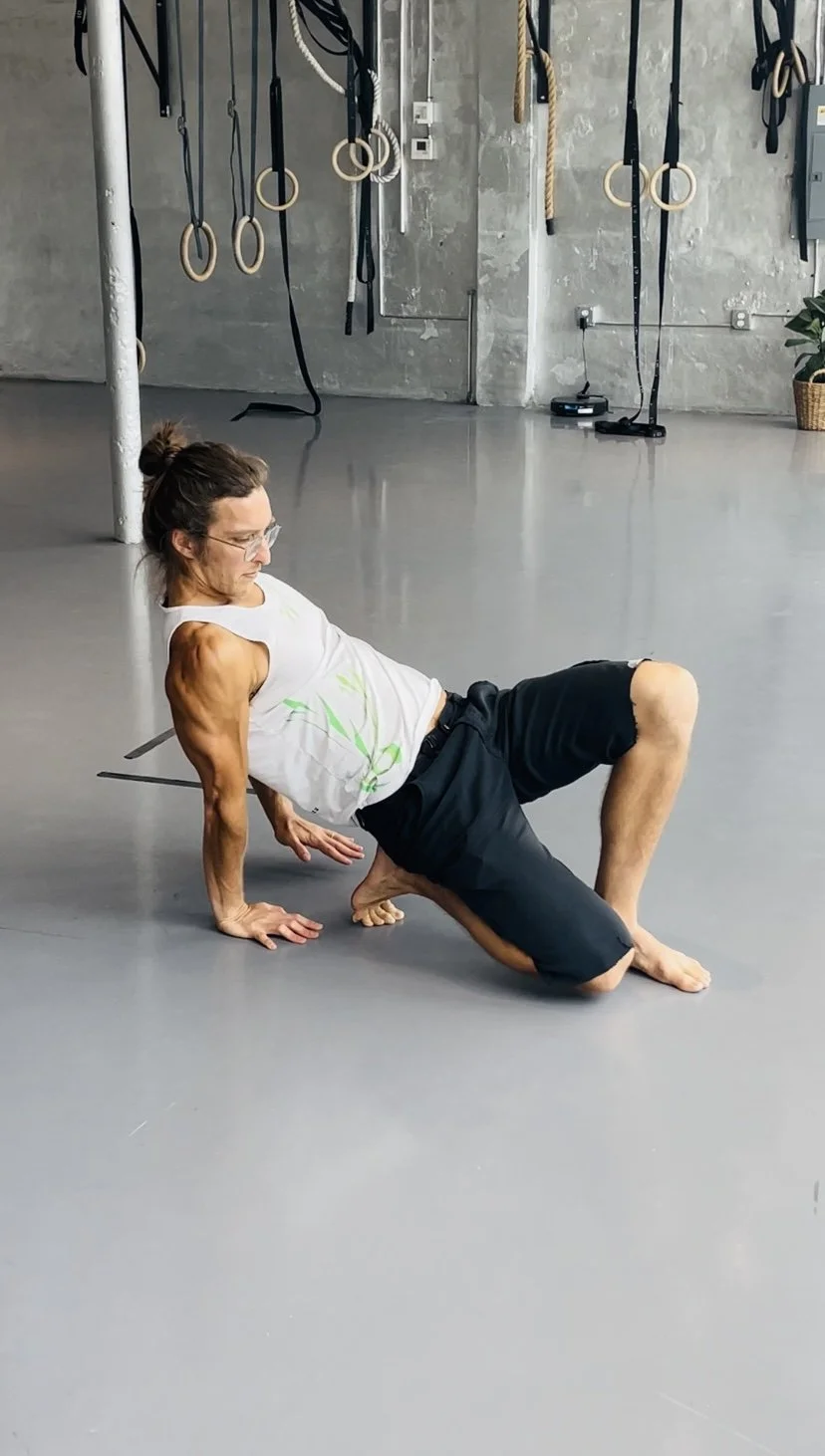

Where should you feel a stretch?
Where should you feel a “stretch”? There’s not a specific place to feel a stretch. This clip explains why… and what to focus on instead.