
Being a Good Partner (Movement Culture)
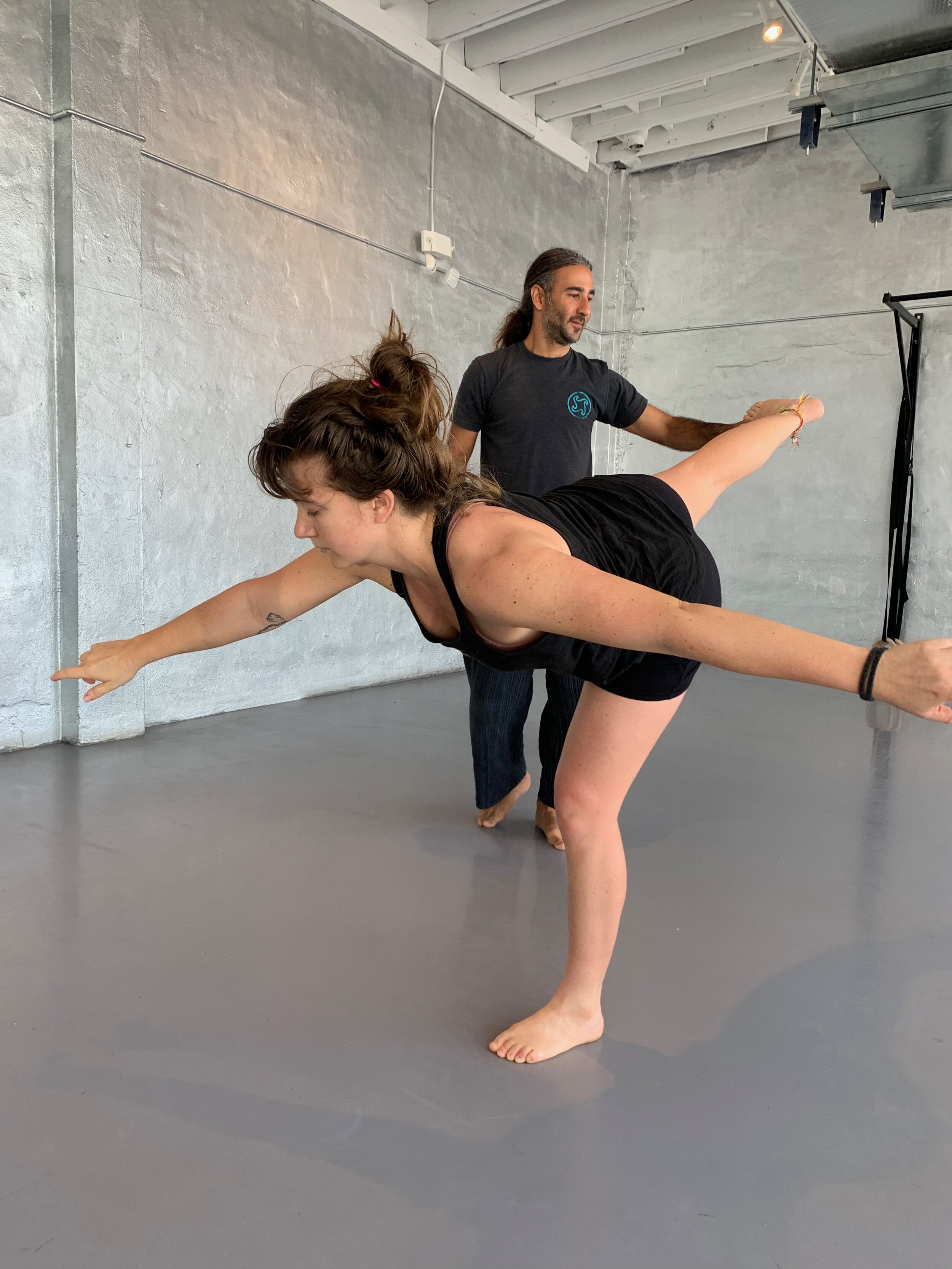
When engaged in partner work, it is common enough that one is the agent, and the other the patient. That is, one seems to be doing “the work” while the other provides the context for practicing. One component that must differentiate our practice and our culture, that we must install to be truly rarefied, is to bring quality to that dynamic. And one of the most difficult aspects of cultivating such a high level of partner work is the attention and focus of the agent.
When engaged in partner work, it is common enough that one is the agent, and the other the patient. That is, one seems to be doing “the work” while the other provides the context for practicing. One component that must differentiate our practice and our culture, that we must install to be truly rarefied, is to bring quality to that dynamic. And one of the most difficult aspects of cultivating such a high level of partner work is the attention and focus of the agent.
When working in the role of agent, we should be bringing maximum focus to the task of giving our partner the situational challenges they need for true growth, which entails a balance between accessibility and challenge. An unyielding internal monologue: “What does my partner need from me? What degree of challenge do they need to continue growing? What should I be doing differently?” It is an unrelenting process of recalculating, recalibrating. There is no rest between sets for the good partner.
Why obsess over this? Why not just enjoy the turn when it is mine, and rest in between, take a mental breather?
Because the next step of the journey necessitates that I have a developed partner! Only when my partner improves with me does that next journey become available. there is a realm of possibility which opens up only when I have a partner who has developed, and the same goes at a larger scale - when the entire community has matured.
(And, another reason, for those who read what lies between parantheses… if we have this practices in our lives to give us a space to explore all aspects of mind/body/movement, to engage whatever that higher order phenomenon entails and allows us the joy of chewing on and dealing with… the challenge of being a good partner is no different. We want to be good at everything we do… even at the 1-degree-abstracted, 2nd order level of “how I am in relation to others”)
First Order Retrievability
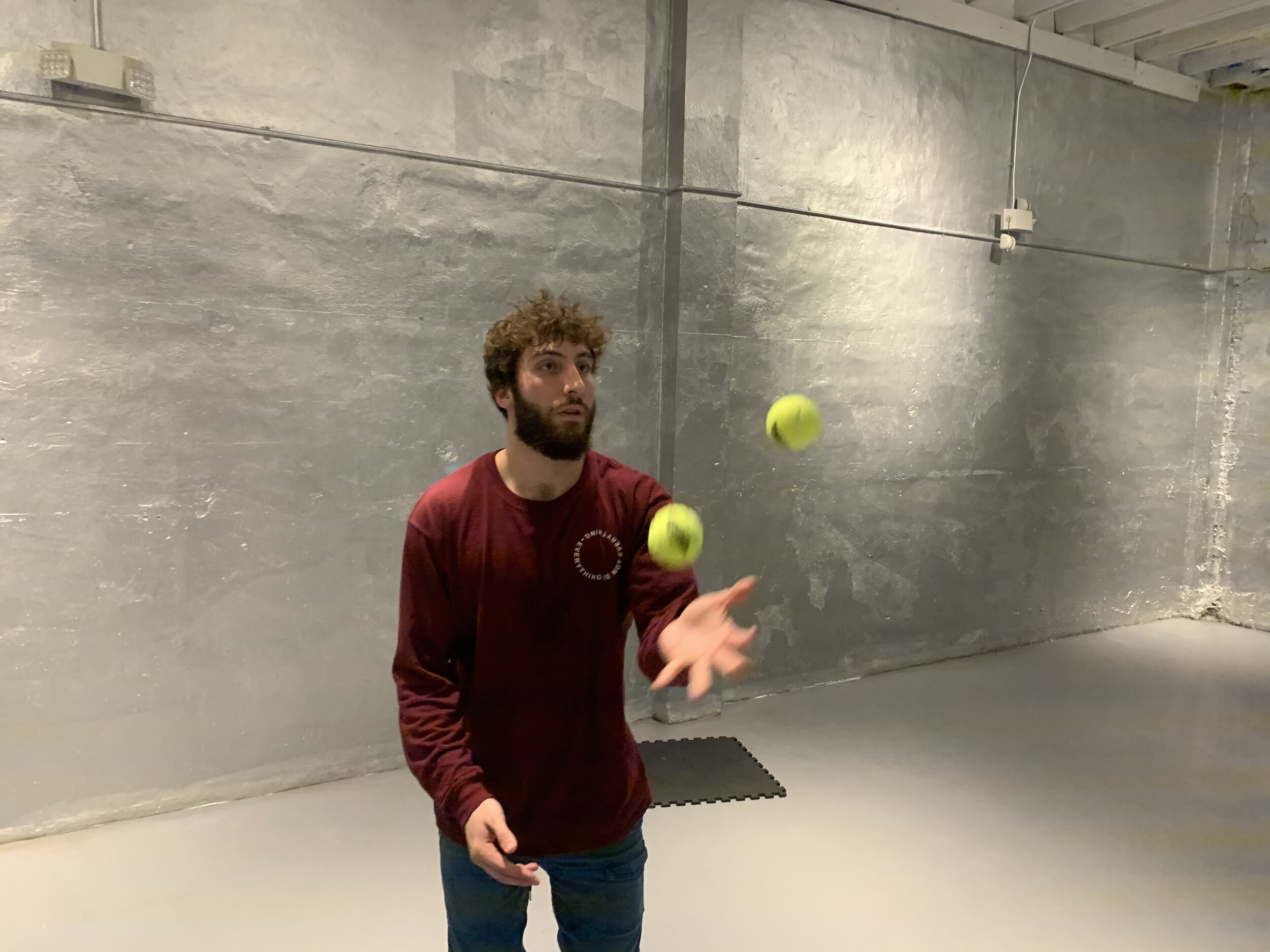
First order retrievability: Any tool you will use should be immediately accessible from the place from which you work (Adam Savage). Our craft is less characterized by specific tools, but this philosophy bears significant relevance for us.
In his book “Every tool is a hammer”, Adam Savage explains his concept of “first order retrievability”. There, it is in the context of running a workshop - any tool you will use should be immediately accessible from the place from which you work.
Our craft is less characterized by specific tools, but this philosophy bears significant relevance for us. We can generalize this idea, first order retrievability, and it can serve us well in many layers of the practice.
For example, creating multiple paths into a specific acrobatic element, and ultimately having access from anywhere - it will produce something seeming surreal, unfettered by typical constraints.
We will reiterate this process until we approximate the state of first order retrievability, in the micro and in the various scales along the way to the macro...
Ps No meme is safe.
Dynamic Balance
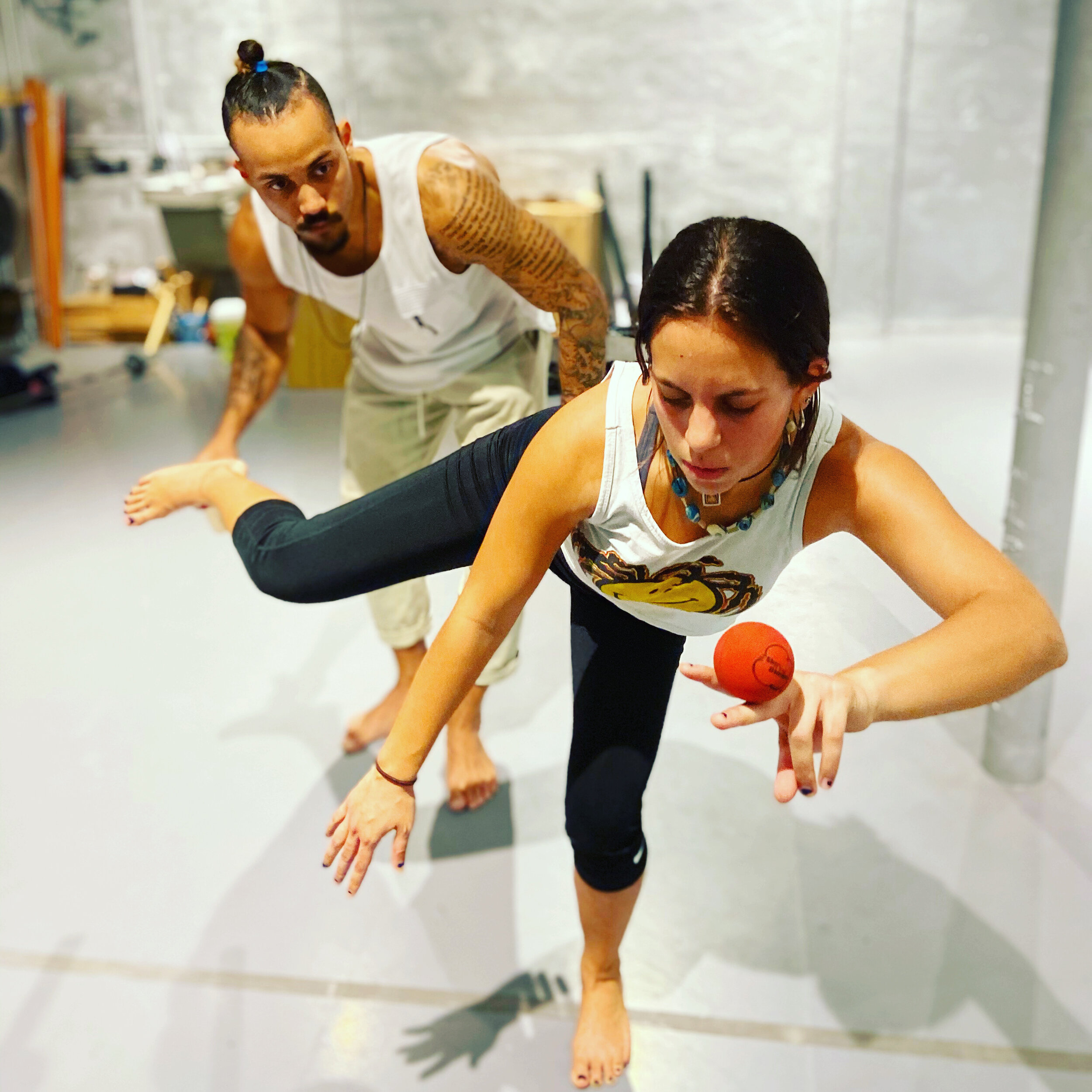
The importance of the ability to keep your center of mass over the base of support (balance) is difficult to over-state. On the other hand, it’s not the end-all-be-all of a movement practice – just look at the best “balancers” (whether on hands or feet) and see that they struggle when control has to be sacrificed.
The importance of the ability to keep your center of mass over the base of support (balance) is difficult to over-state. On the other hand, it’s not the end-all-be-all of a movement practice - just look at the best “balancers” (whether on hands or feet) and see that they struggle when control has to be sacrificed.
And it’s multifaceted - staying in place while keeping the structure rigid doesn’t prepare you for for maintaining balance while handling dynamic changes in the structure (you know... the situation also known as “moving”).
We love the idea of working on all the balance systems - from the most rigid to the dynamic, and then playing at the other end of the spectrum: falling forever.
Several of our students have made the interesting observation that this dynamic balance is one of the attributes which was most quick to adapt and improve. It's inevitable - when you spend your time in these scenarios, you develop the ability to "sink" into the ground, you learn to use the limbs for counterbalance, you improve the sensitivity of the foot, you refine proprioception, you strengthen the ankle and supporting structures in countless angles, and certainly install other adaptations besides...
Killing Your Self - Why Eliminating Style Is Beautiful
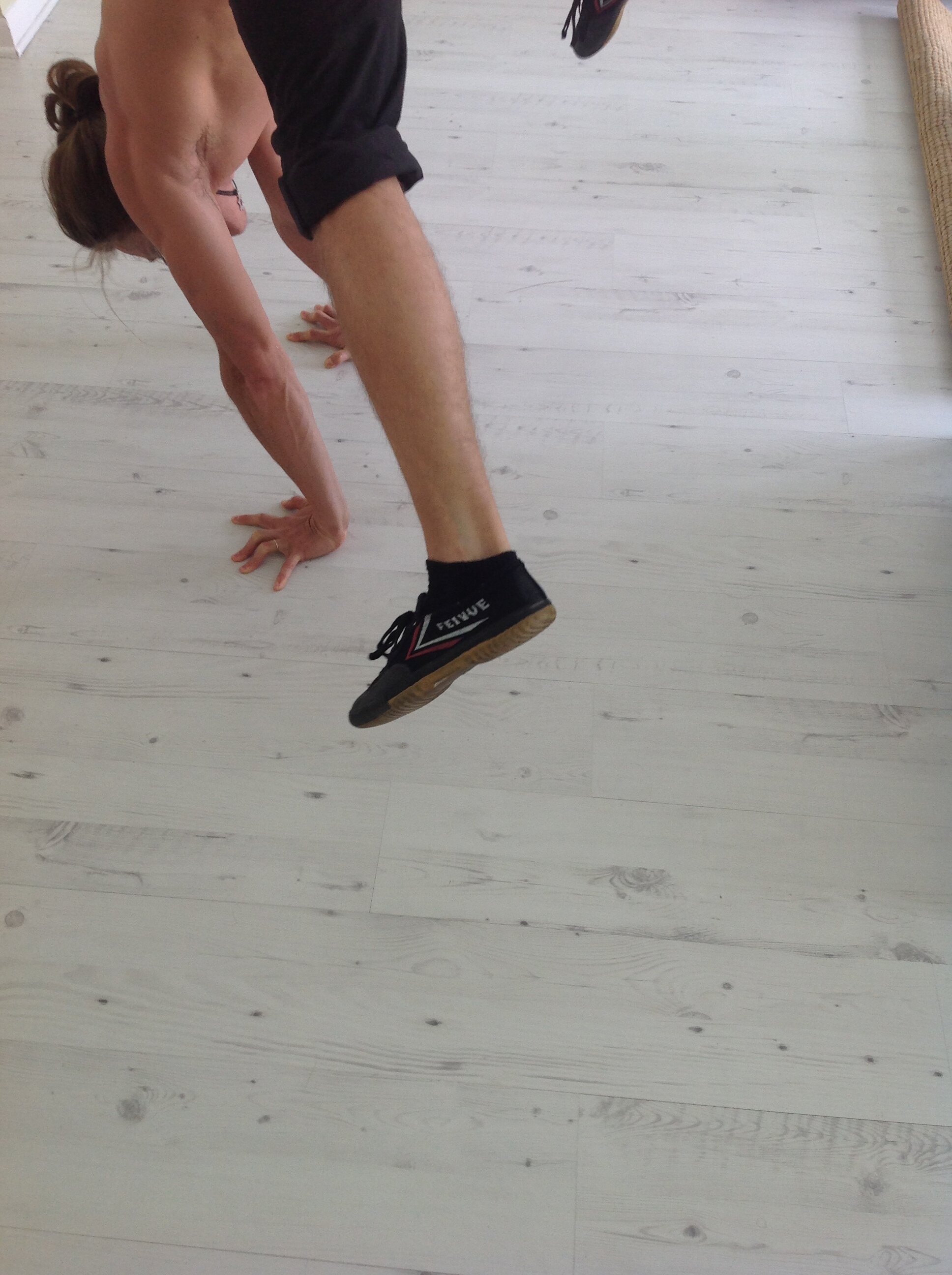
Style is habit, and a habit is NOT who you are. In constraining style, we evolve. I was conflicted about this at first, but I discovered that eliminating mannerism provided an opportunity to rise above the illusory self I take for granted, and see the outline of something more expansive and inclusive.
Style is habit, and a habit is NOT who you are. In constraining style, we evolve. I was conflicted about this at first, but I discovered that eliminating mannerism provided an opportunity to rise above the illusory self I take for granted, and see the outline of something more expansive and inclusive.
We identify with aspects of ourselves by habit more often than by choice. This is an over-identification, an addiction to a way of being. It is a comfort zone. Even when it is something we dislike about ourselves, we can hide behind the shield of “authenticity”. We are so obsessed with being authentic, that we end up inauthentic. By insisting on being the way we think we are, we are unable to be who we really can be.
I can’t afford to be caught up in how I imagine I am, in pretending to be myself pretending to be myself. So I have decided that my movement practice is a space where style is not permitted, where I aim for the essence and to eliminate all manifestations of style.
This aspect of silencing a false self isn’t about hating my self… it’s because I love that I am, and I want to discover myself. How can I know who I am, if I take for granted that these mannerisms are who I am? I am not what I first saw when I first saw myself. How much of me remains hidden behind the veil, because I refused to look a bit further? Well, this is my process for looking further.
Unexpectedly, this “self”-effacement has only elevated and refined the applications of my “style”. When I let the djinn possess me, when I join in the aether of ecstasis and become the vessel…
But wasn’t that obvious? If manifestations of style are actually forms of possession… if genius comes from genie, and music comes the muse, if all forms of expression comes from the external… Shouldn’t the ability to empty the vessel, to allow for more inhabitation, result in a higher form, a more complex and nuanced and fulfilling form of “expression”?
https://www.youtube.com/watch?v=HV8JyhgeSAw
What you see is (not) what you get
What you see is (not) what you get. Our reality is virtual, built on semantics, filtered by psyches, and mediated by associations.
This is old hat for the Vedic philosophy, where our perceptions will always be hidden behind the veil of maya, illusion. And for the Jewish mystics as well - the Hebrew word for world, Olam, is more aptly translated with an association of the mystery, what is hidden, what cannot be seen. And Bertrand Russell says as much in the Problems of Philosophy - we cannot see things as they are; we project a visual idea onto the objective world, but that is a subjective experience, not inherent to reality itself. If all three of these are pointing at the same truth, that we cannot witness an objective reality, then there is a curious plot twist: whatever we imagine reality to truly be, it cannot be, because we’ve imagined it as thus.
The question is not “is this real?”. The question is - what does it mean to you?
We limit ourselves to thinking of as real that which reflects light. But our relationships, the systems that surround us like some mycelial network, our semantics… all are real. More real than the philosopher’s archetypal table, which turns into a chair when I sit on it. One becomes two, two becomes none.
What you see is always more or less than what there is.