

Park Acrobatic Session
What happens outside of class times: Sunday park acrobatic session. We introduced to students some new techniques that we’ll build into a system over the coming weeks.


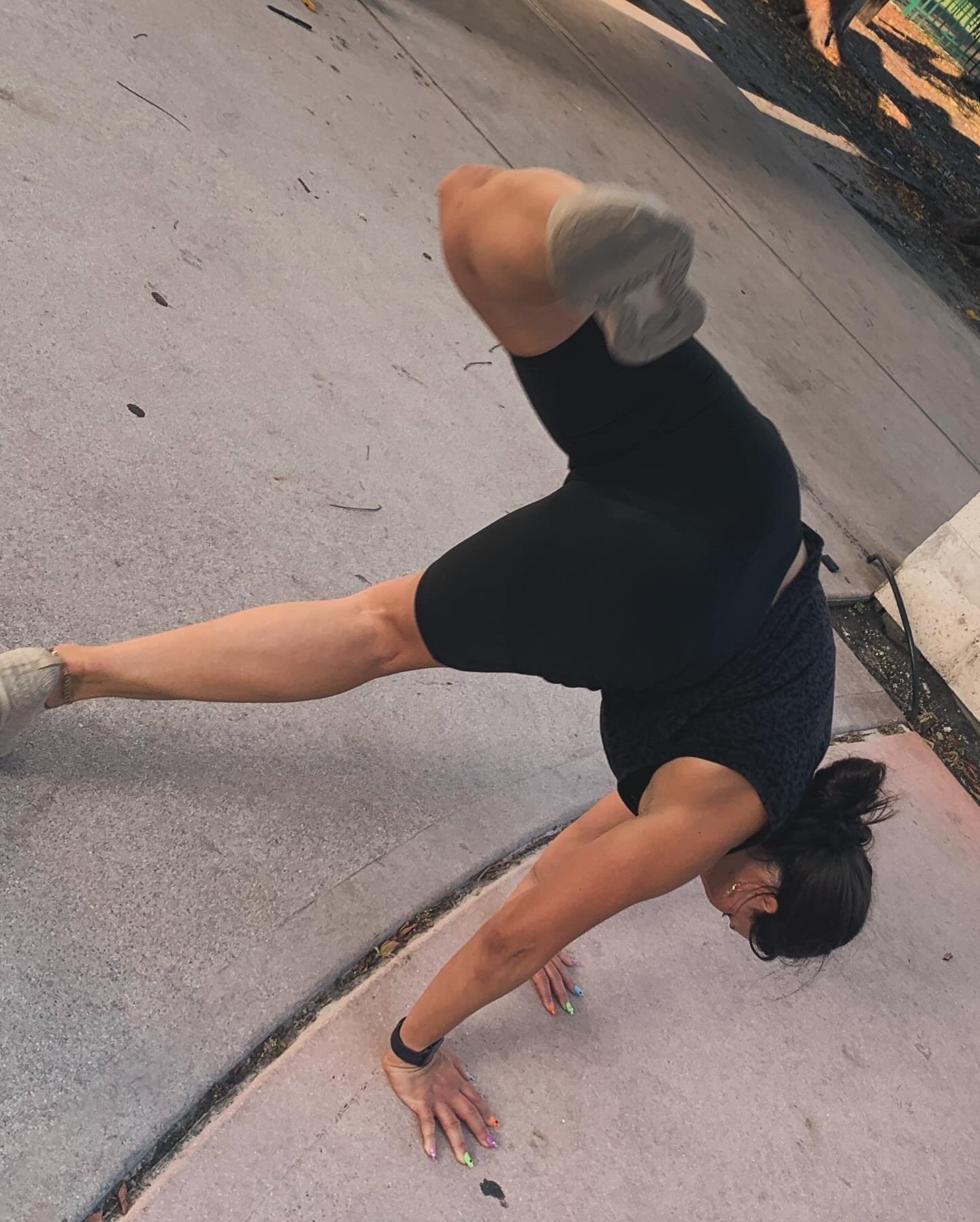


Passive vs Active starting points in the pursuit of efficiency and connectedness
What is the most efficient way to do something with the least tension, in the most efficient and connected way possible? To start with everything active, or everything passive?
In pursuit of a connected body, some activations are necessary, some not. But we don’t know which are which. If we start completely passive, and activate one thing at a time, we will never achieve the result, much less with any efficiency. To arrive at the state of efficiency, least tension, and connected body, you cannot start with everything “off”.
Imagine an electric box with 100 on/off switches, and a light-bulb that turns on only when 5 specific switches are on. If you start with all the switches ON, you can switch them off, and whatever turns the light off, you switch back on.
But if you start with everything OFF… it’s immediately evident - the number of switch actions is astronomical. You would be there forever.
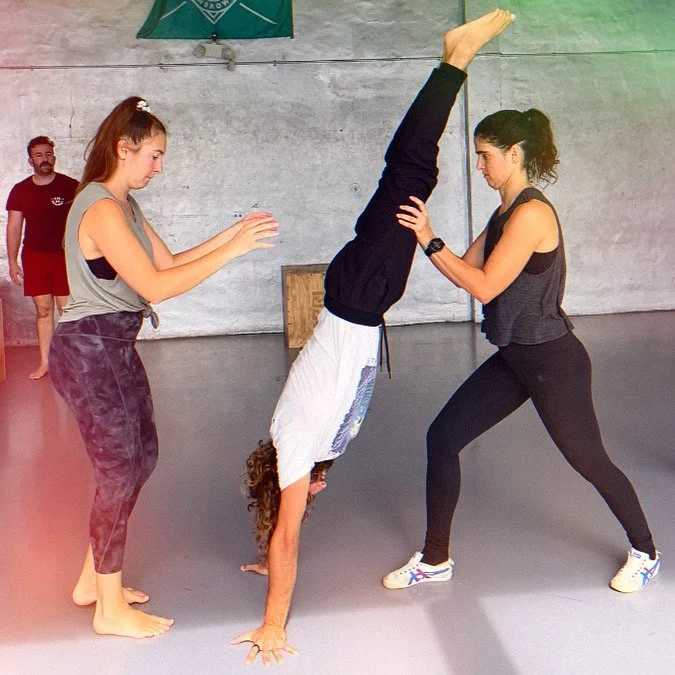
On Struggle and Suffering
It’s an error in translation to interpret the feeling of failure as a sign of actual failure. The learning process by definition is characterized by this feeling. This is something Ido seemed to suggest in the recent interview with Vika, that WE DO NOT GET RID OF SUFFERING.
Even as we say that, behind our words, there is this optimistic hope that saying this enough times will make the process easy, “by accepting this truth, the suffering will be gone, and everything will be made easy”. It’s a hidden expectation in so many of our actions.…
As if strength work ever feels like anything but what strength work feels like… which is like weakness! Lifting a thing you can only barely lift. The arbitrary numbers indicating the weight might change, but the raw feeling NEVER changes.
Only your relationship to it does; and how can the relationship to a feeling change, if the feeling itself doesn’t? WE have to change.
Maybe you’re fine with strength work - it already feels good to you. But how do you feel when you’re asked to listen to an interview between a spiritual philosopher and a theoretical physicist? You start tuning out…
IT’S THE SAME STRUGGLE.
We need to be less busy wanting our work to feel easy, and more busy finding the right challenges for us. Not a “close your eyes till flames pass through me” kind of thing, but what is the challenge that will demand from me effort, but not crush me beneath?

Workout: Touching The Floor And Low Bridging
Here are some tasks we’re using lately in the classes. Below is a workout you can follow.
1. Exploratory Quadrupedal Drills
This is a more open-ended task for warming up the wrists. It targets different angles, avoiding the trap of overly repetitive warmup tasks.
Variation 1: Hands fixed on the floor
Start in a pushup position. You will keep the hands fixed in place. Shifting the weight out of a foot, send it somewhere, being attentive to the tension around the arms. Then take another step with the feet
Variation 2: Changing hand orientation
In this one, you can occasionally change the hand orientation (where the fingers point), but not the position - they always stay in the same spot. It will allow you to explore new areas.
Variation 3: Changing hand position
Finally, we allow the hands to step around as well. But we avoid lifting them when the feet are lifted, and we pay special attention to the weight shifting quality.
Some things to consider when working with these 3 variations
Let the ranges open up; don’t force them open. Some days more, some days less
mind the quality of the feet - notice how Aylin is stepping here. Not rushing.
Look for the incoherent positions.
Take long steps
2. Low Bridge Variations
basic hold - where all beginners should, well… begin. Make sure the heels come up, and to keep the butt supported, not collapsing on the heels
one arm shifts - it requires creating a new connection across the body, to prevent collapsing. Build it up gradually, removing one finger at a time, and try to notice what the body requires to prevent the collapse.
fingertip - requires and develops the ability to shift the weight to the legs. Shift your knees forward to release weight from the fingers. Similarly make sure to gradually remove one finger at a time (and don't just add more pressure to the remaining fingers, but make sure it goes towards the feet).
briefly shifting weight out of hands - very useful for other transitions out of the bridge. We use this in the carnerinho, for example.
3. Putting them together: Sample Warm-up For Locomotion
Beginner
A1. Exploratory warmup drill #1 - 2 minutes of work
B1. Low bridge slide - 3 second hold x 6-10 reps
C1. Exploratory warmup drill #2 - 2 minutes of work
D1. Low bridge slide - 3 second hold x 6-10 reps
E1. Exploratory warmup drill #3 - 2m of work
F1. Low bridge slide - 3 second hold x 6-10 reps
Intermediate
A1. Exploratory warmup drill #1 - 2 minutes of work
B1. Low bridge slide on fingertips - 3 second hold x 6-10 reps
C1. Exploratory warmup drill #2 - 2 minutes of work
D1. Low bridge slide to 1 finger or no hand - 3 second hold x 6-10 reps x 2 rounds / 1m rest
E1. Exploratory warmup drill #3 - 2m of work x 2 rounds / 1m rest
F1. One arm low bridge hold - 15-30s per side x 2 rounds / 1m rest
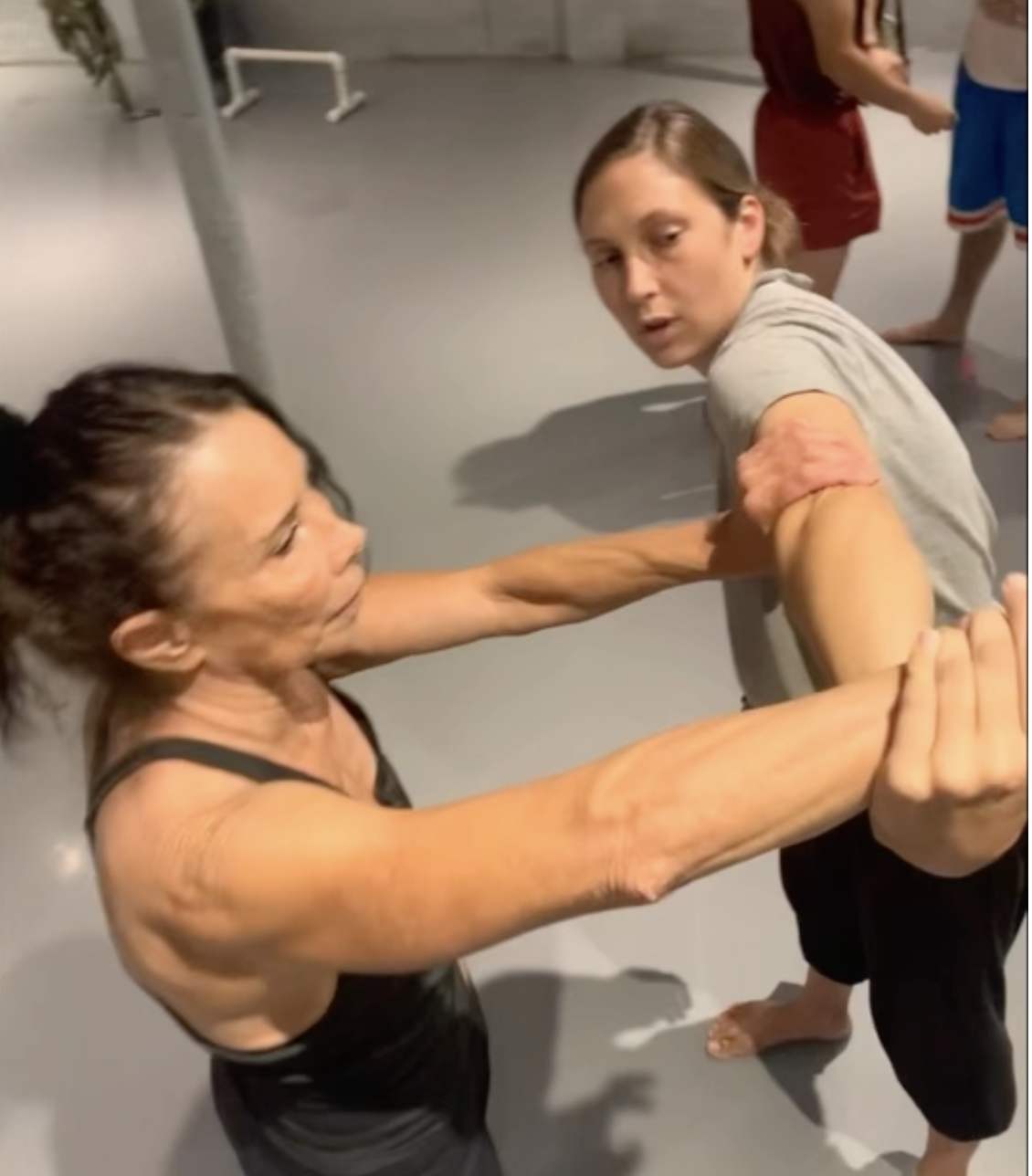
The movement cloud and movement projects
We work with movement projects in our classes - you can see some recent ones here.
But… what do we even mean by a “project”?
Our practice is centered around developing movement. But can this even be done? Movement is inherently nebulous. So there is the need to work with ever-evolving material. But if we just work on things in a disorganized fashion, we cannot produce enough friction to generate the catalyzing heat of transformation.
This is where the usage of projects comes in. From this amorphous cloud that is “movement”, we impose a temporary order in the form of a project. We briefly condense the cloud into a fixed form, so that we can work with it. And in that process of working with it, we work on ourselves, and our own movement becomes transformed.
Once the project is concluded, WE have changed, and we can move on to the next project. Because that temporary project, that form, that condensation of the cloud is NOT the cloud - it is only an instantiated substantiation of it.
The cloud is neither the abstraction that it exists as in the formless state, nor the totality of its materializations across time. It is simultaneously both the platonic ideal AND the goethian multiplicity.